Individual Giving in Arts Centres
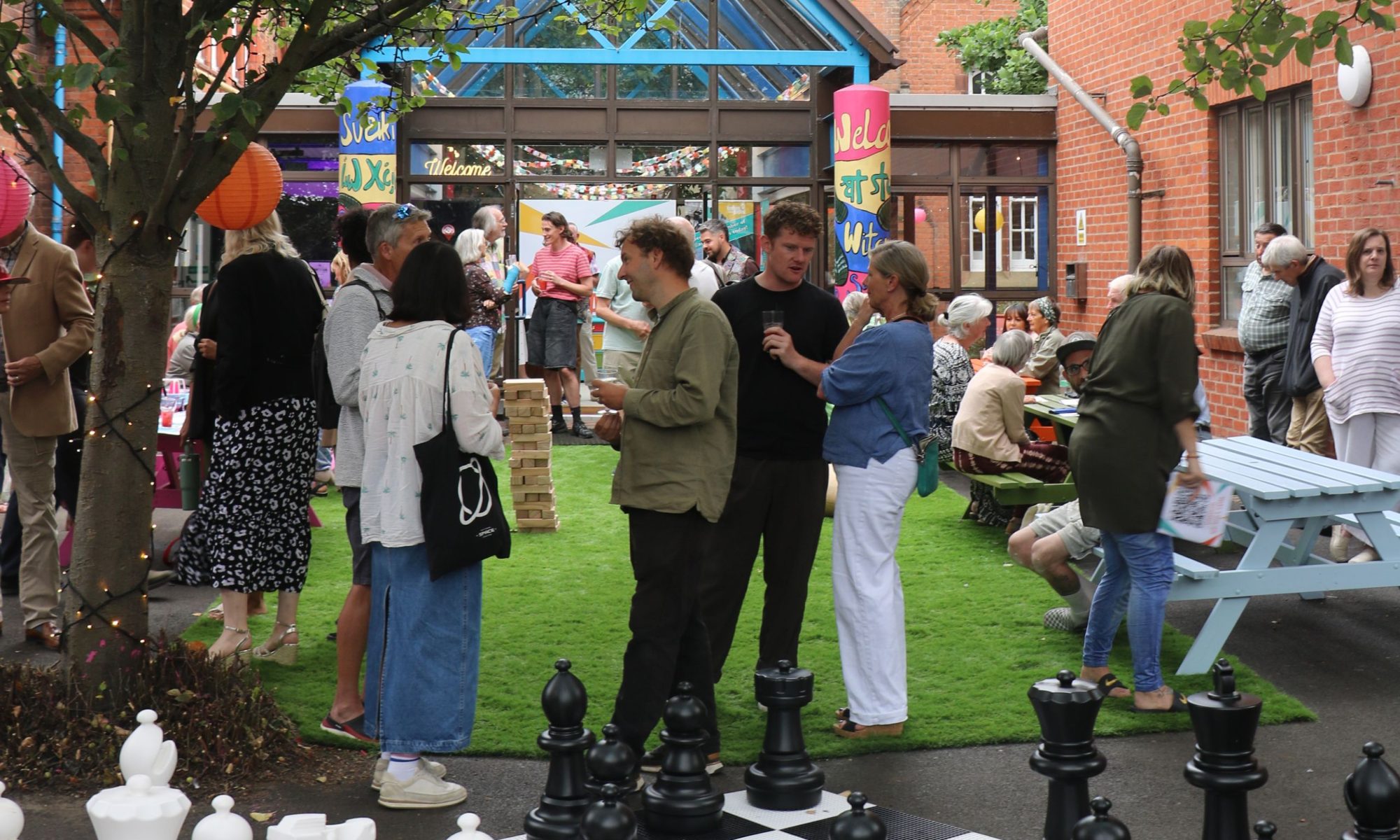
(Photo: Eastern Angles)
Over the past year, a group of arts centres from across the UK have been quietly testing something that many of us in the cultural sector know matters, but often struggle to prioritise: how to build individual giving in ways that feel realistic, values-led and genuinely rooted in our organisations and communities.
The Individual Giving Action Research Group, convened by Future Arts Centres, was designed as a practical space rather than a theoretical one. Participating organisations were not asked to develop perfect strategies or replicate best-practice models imported from elsewhere. Instead, they were supported to try things out in their own contexts, to reflect honestly on what happened, and to share learning with peers who were grappling with very similar questions around capacity, confidence and culture.
What emerged over the course of the programme was a strong sense of shared experience. Regardless of scale or geography, organisations encountered familiar challenges: the discomfort of asking for money, the difficulty of carving out time in already stretched teams, and the tension between the long-term nature of individual giving and the short-term financial pressures many venues are facing. Even organisations with existing fundraising capacity found that individual giving raised particular questions about language, systems and internal alignment.
At the same time, the work surfaced a quiet confidence. Participants reported that when individual giving was approached as a relationship rather than a transaction – when it was clearly connected to purpose, impact and values – audiences responded. Small interventions often made a difference: clearer messaging, simpler propositions, better integration into ticketing journeys, or taking the time to thank people well. For many organisations, success was not just measured in income, but in increased confidence across staff teams, better internal understanding of business models, and a growing sense that asking for support could sit comfortably alongside artistic and social ambition – outcomes that will feel familiar across much of the cultural sector.
One of the most important insights from the group was the need to reframe expectations. Individual giving is not a quick fix, and it is rarely something that can be delivered ‘off the side of a desk’. The organisations that made the most progress were those that allowed themselves to start small, to focus on doing one thing well, and to recognise learning and culture change as legitimate outcomes in their own right. In several cases, choosing not to launch immediately, or to delay activity until systems or capacity were in place, proved to be a positive and strategic decision.
This report brings together that learning in a practical, grounded way. It shares what worked, what didn’t, and what participants would do differently, illustrated through detailed case studies from arts centres working in very different contexts, with learning that is relevant to a wide range of cultural organisations facing similar questions around capacity, confidence and sustainability. Our hope is that it offers reassurance as much as guidance: reassurance that many of the challenges around individual giving are shared, and that progress often comes through iteration rather than perfection.
For Future Arts Centres, this work sits within a wider commitment to supporting arts centres as resilient, values-led creative enterprises, and to sharing learning that can inform practice across the wider cultural sector. The Action Research Group has reinforced the power of peer learning and reflective space, particularly at a moment when financial pressure can make it hard to step back and think strategically. It has also highlighted the appetite across the network for more support in this area, rooted in the realities of arts centre practice rather than abstract fundraising models.
This is not the end of the conversation. We see this report as a foundation, not a conclusion, and we are keen to build on it through further programmes, shared learning and practical tools that support arts centres, and other cultural organisations navigating similar challenges, to grow individual giving in ways that feel sustainable and authentic. As the funding landscape continues to shift, we believe this work will only become more important – and we look forward to developing it alongside our members in the months ahead.
Read the full report here.