Exploring Creative Democracy with Goldsmiths
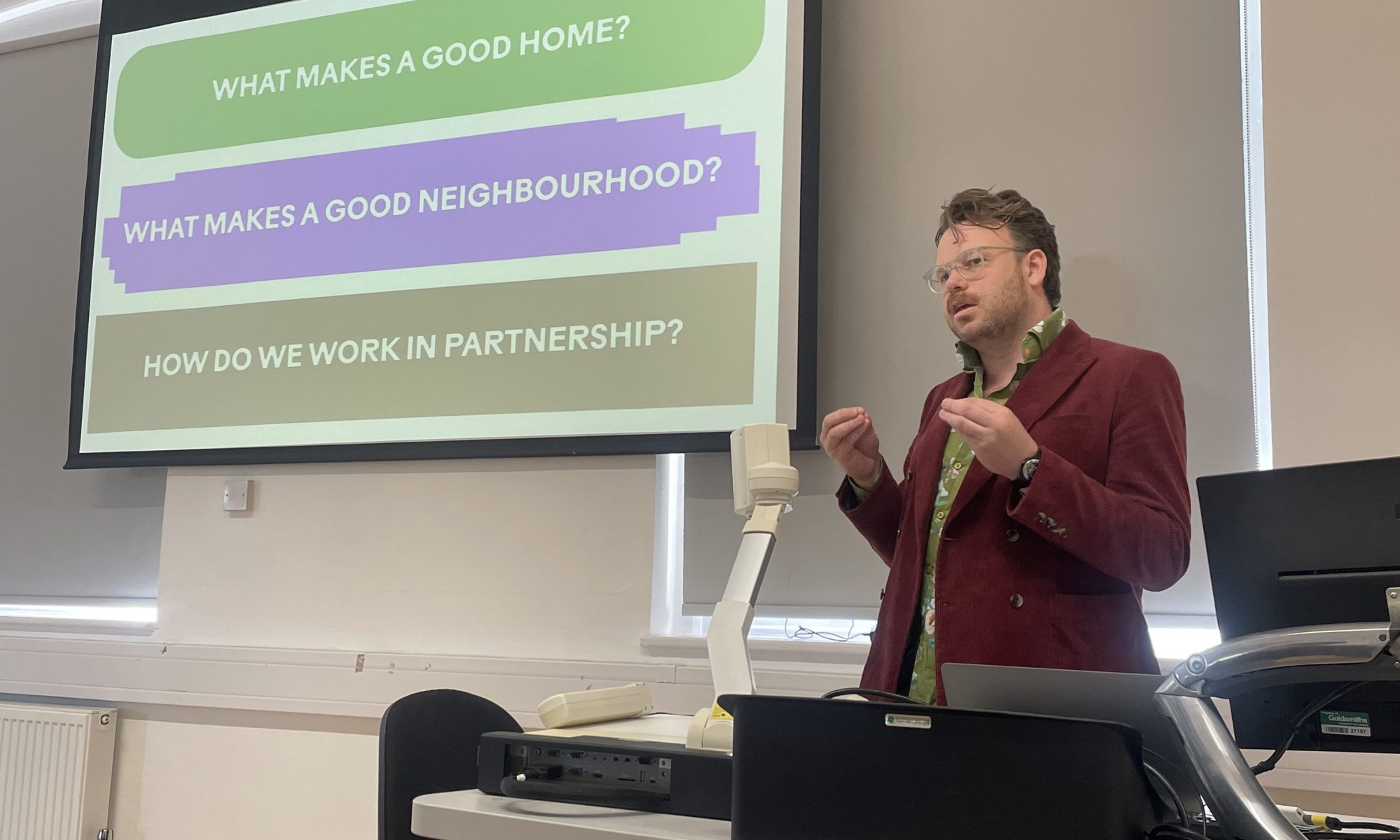
Future Arts Centres (FAC) and Goldsmiths, University of London recently brought together arts leaders, researchers and practitioners for a roundtable exploring how creativity, culture and participation can not only help shape civic life but have a meaningful role in the democratic process.
Hosted at Goldsmiths in April, the event marked the beginning of a new partnership between FAC and the university, bringing together members of the FAC network with academics working across civic engagement, cultural policy, theatre, anthropology and social justice. The discussion focused on the emerging idea of ‘creative democracy’ – a term being used to describe the ways arts centres and cultural organisations are helping communities participate more actively in shaping the places they live, and the decisions that affect them.
The aim was not to arrive at a fixed definition, but to begin developing a shared understanding of what creative democracy looks like in practice, why it matters now, and what role arts centres can play within it.
The discussion took its starting point from philosopher John Dewey’s 1939 essay ‘Creative Democracy: The Task Before Us’, which argued that democracy is not simply a political system but “a way of life”, sustained through participation, cooperation and the belief that people should actively shape the world around them. Participants reflected on how Dewey’s thinking resonates in the current moment, as communities grapple with declining trust in institutions, growing inequality and increasing political polarisation.
In written reflections shared ahead of the roundtable, John Newbigin OBE suggested that creative democracy could help local authorities “learn to ask the right questions”, particularly around issues such as empty high streets, community participation and urban change. He argued that arts-led approaches could help bridge the gap between civic rhetoric and meaningful public involvement, creating more community-led approaches to culture and regeneration.
For Future Arts Centres, creative democracy describes approaches that use creativity, participation and cultural practice to help people actively shape the decisions, environments and services that affect their lives. It is rooted in the belief that arts centres can act as trusted civic spaces: places where people gather, debate, imagine and organise together.
Across the discussion, participants returned repeatedly to questions of trust, participation and power. Contributors reflected on the growing erosion of trust in institutions, the limitations of traditional consultation processes, and the need to find more imaginative and human ways for communities and public bodies to work together.
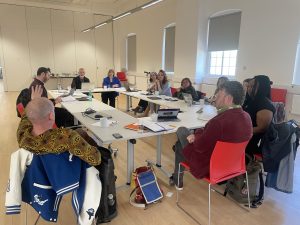
The roundtable also highlighted the depth of thinking already emerging around the concept. Dr Cecilia Dinardi described creative democracy as “the imaginative ways in which democratic values are promoted, enacted and defended in everyday life”, rooted in grassroots mobilisation and collective action. Dr Molly McPhee spoke about democracy as something felt and experienced collectively, not simply enacted through formal systems, while Dr Sultan Doughan challenged the group to think carefully about whose voices, languages and forms of creativity are included within democratic spaces.
Dr Tricia Jenkins, lecturer in Arts Administration and Cultural Policy, also emphasised both the permanence and precariousness of arts centres, noting the very different conditions organisations face across the country. She pointed to the value of the FAC network in helping organisations collectively navigate these challenges, share learning and build capacity for this work.
Alongside these academic perspectives, FAC members shared examples of what creative democracy already looks like on the ground.
Vicki Amedume MBE, of The Albany, reflected on the importance of arts centres as places that can hold nuance, uncertainty and complexity at a time when public discourse often becomes increasingly polarised. Drawing on the Albany’s long-term work with communities in Deptford, she highlighted how sustained relationships – rather than fixed structures – create the conditions for meaningful participation and collaboration.
At Old Diorama Arts Centre, Daniel Pitt presented work developed with Camden Council and local residents around regeneration in Euston. Through workshops, public art, neighbourhood festivals and creative consultation, the project supported residents to shape conversations around housing and development, ultimately contributing to the creation of the Euston Housing Pact – a framework designed to give communities a stronger role in regeneration decisions.
Meanwhile Barnsley Civic shared learning from its involvement in the town’s Pride in Place programme, which explored how creative methods could deepen democratic engagement within local decision-making. Rather than relying on traditional consultation models, the work focused on storytelling, participation and ‘holding space’ for conversations shaped by local people themselves. The project has already influenced how Barnsley Council approaches consultation and engagement.
What emerged strongly throughout the day was the idea that arts centres are not simply venues for cultural participation, but part of the democratic infrastructure of place. Participants described arts centres as bridges between communities and institutions, spaces that can hold complexity and disagreement, and places capable of sustaining long-term relationships built on trust.
There was also recognition that this work is already happening across the FAC network, often without a shared language to describe it. The roundtable also offered an opportunity to reflect on international contexts and parallels to this work – exploring cultural network building models in Europe and South America. Creative democracy may offer a way to connect and strengthen these practices, while also helping policymakers and funders better understand the civic role arts centres already play.
The roundtable is the beginning of an ongoing collaboration between Future Arts Centres and Goldsmiths, under the leadership of Dr Michael Eades, Head of Civic Engagement and FAC’s Co-Directors, Gavin Barlow and Annabel Turpin. Next steps include developing a working definition of creative democracy, exploring international examples and research partnerships, and building opportunities for FAC members to share practice and learning across the network.
At a time when public trust, civic participation and social cohesion are under increasing pressure, the conversation reinforced something many arts centres already know: creativity is not separate from democracy. It can be one of the ways democracy is lived, experienced and renewed.
(Photos by Michael Eades)