New report captures the impact of Our Freedom: Then and Now
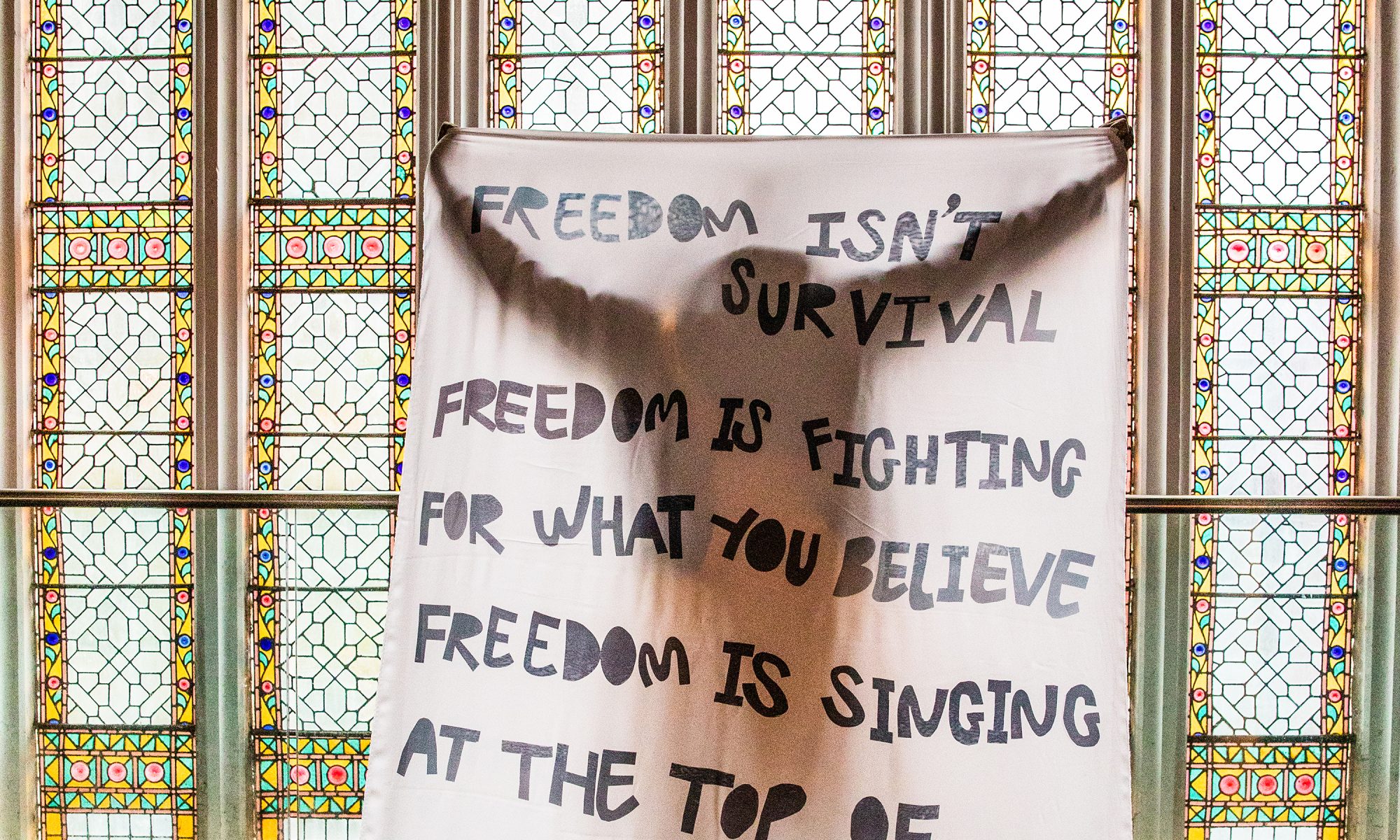
Freedom Then and Now by Leticia Valverdes with participants working with Sonja Burniston
Future Arts Centres has published the final report for Our Freedom: Then and Now, a UK-wide creative programme that brought together arts centres, libraries, artists and communities to explore what freedom means today.
Delivered by Future Arts Centres in partnership with Libraries Connected and Open Eye Gallery, supported using public funding by UK Government through Arts Council England, the programme connected 40 arts centres and 20 libraries across the UK around a shared question: what does freedom mean 80 years after the end of the Second World War?
The report documents the activity, reach and learning from the programme, while also offering a powerful reminder of the role arts centres and libraries can play as trusted civic spaces.
From the outset, Our Freedom was designed to balance national ambition with local leadership. Participating venues were united by a common theme, shared resources and opportunities for collaboration, while retaining the freedom to develop projects that reflected their own communities, partnerships and local priorities.
Gavin Barlow and Annabel Turpin, Co-Directors of Future Arts Centres and Our Freedom: Then and Now, said:
“Our Freedom: Then and Now has shown what can happen when national resource meets local trust. By working through arts centres and libraries that are already deeply rooted in their communities, the programme enabled people to shape conversations about freedom in ways that felt meaningful to their own lives and experiences.
The report highlights the unique role these organisations play as civic spaces: places where people can come together, share perspectives, build relationships and engage with complex ideas through creativity and culture.
We hope the learning captured here will be valuable not only for everyone involved in Our Freedom, but for anyone interested in the role culture can play in strengthening communities and civic life across the UK.”
Across the UK, more than 10,000 participants took part in projects developed through co-creation and socially engaged practice. Together they created exhibitions, performances, publications, community conversations, installations and events exploring topics including identity, migration, remembrance, belonging and civic life. More than one million people engaged with the programme during 2025 and 2026.
The report highlights the unique contribution that arts centres and libraries can make during a time when public conversation can often feel polarised. Participating organisations provided welcoming spaces where people could share experiences, listen to differing perspectives and take part in creative conversations about issues that matter in their communities.
The programme also reinforced the value of partnership working. Through collaboration between arts centres, libraries, artists, community organisations and national partners, participating venues reported stronger local relationships, increased confidence in hosting civic conversations and new opportunities for future work. The report identifies the programme’s cluster model and peer-learning approach as particularly effective in supporting collaboration and shared learning across the network.
Alongside the statistics and programme overview, the report includes stories from participants, artists and project leads that demonstrate the impact of the work on people and organisations. Together they show how cultural activity can strengthen confidence, build connections, broaden participation and support communities to have important conversations together.
Future Arts Centres would like to thank all participating venues, artists, communities, Libraries Connected, Open Eye Gallery, the Department for Culture, Media and Sport, Arts Council England, and everyone who contributed to this shared national moment.